
Risk-Oriented Audit System
Letting Risk Data Decide “What to Audit First”
A major financial institution needed to plan audit schedules spanning hundreds of audit factors across multiple business units each year. Previously, this annual plan relied on senior managers’ experience and judgment, manually arranged in Excel — which items to audit this year, which next year, how to set the frequency — all based on human intuition.
The problem wasn’t that they couldn’t produce a plan. It was that the rationale behind the schedule couldn’t be explained, verified, or quickly adjusted.
The Challenge: Audit Plans Disconnected from Risk Assessments
- Opaque scheduling rationale: Why audit this item this year and that one next year? The risk judgment behind it lived in managers’ heads, leaving teams unable to align
- Ripple effects from changes: When regulations changed or organizations restructured, manually re-scheduling hundreds of items was time-consuming and error-prone
- Risk assessments gathering dust: Significant effort went into risk assessment reports, but at the scheduling stage, decisions reverted to manual judgment — the two were never systematically linked
- Version chaos: Plan drafts circulated among multiple people for revision, making it nearly impossible to track which version was current or who approved what
The Solution: Automated Linkage from Risk Computation to Audit Scheduling
Structured Risk Factor Computation — Making Assessments Calculable and Comparable
Risk assessments are decomposed into multi-dimensional structured factors including inherent risk, control measures, and residual risk, with the system automatically computing risk scores and grades. All assessments use the same computational framework, ensuring consistent cross-unit and cross-year comparisons.
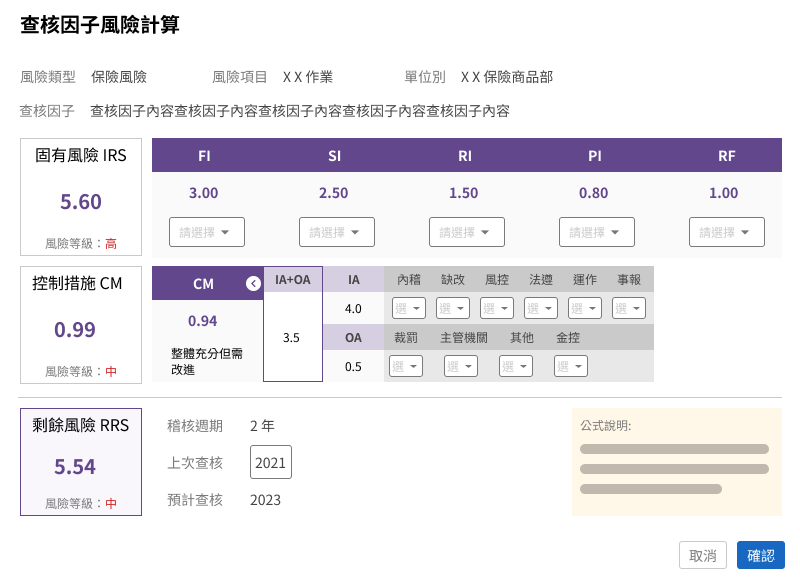 The image above is illustrative. Actual interfaces are customized per client requirements and cannot be disclosed due to confidentiality agreements.
Risk-Driven Scheduling — Automatically Generating a Three-Year Audit Blueprint Based on Risk Levels
This is the core of the system. Audit plans are no longer manually arranged item by item. Instead, the system directly uses risk assessment results to recommend audit frequency and annual allocation for each factor. High-risk items get priority and higher frequency; low-risk items have extended cycles — ensuring limited audit resources are precisely deployed where they’re needed most.
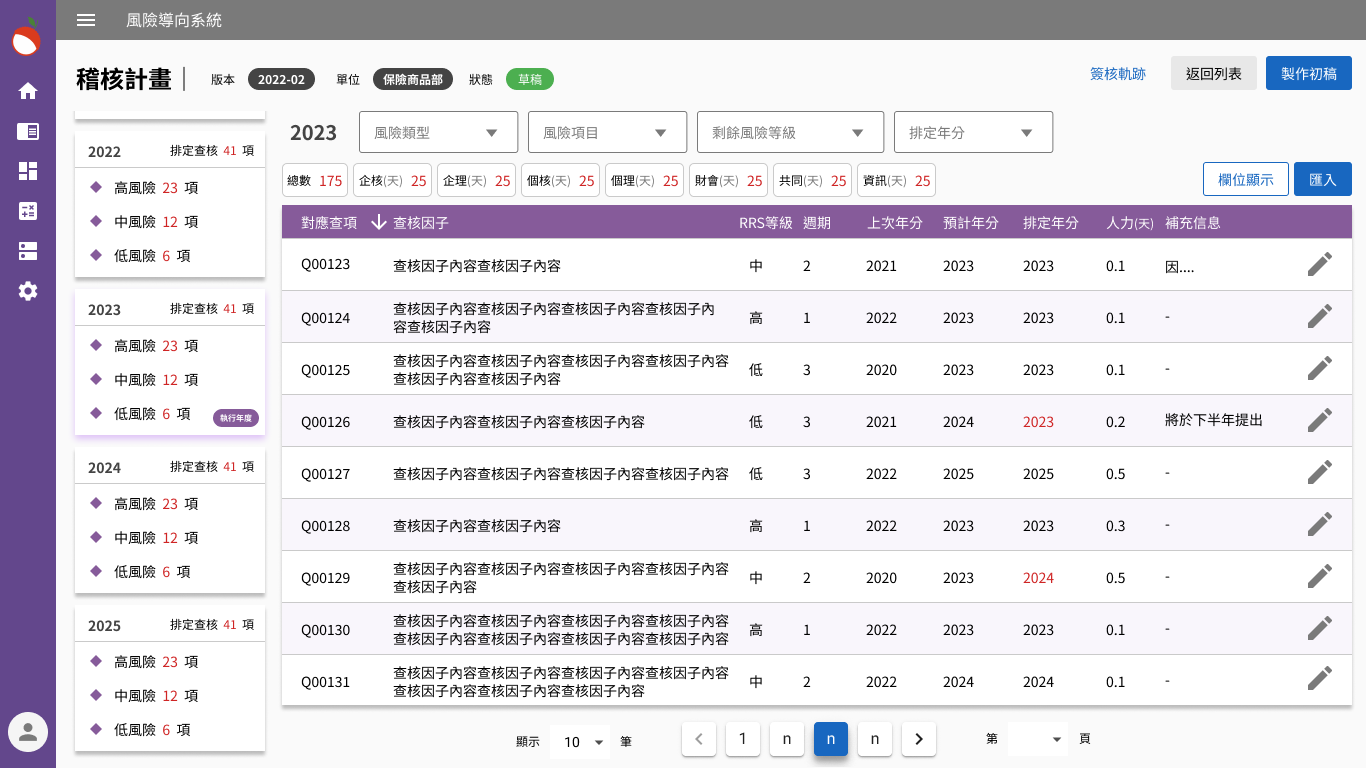 The image above is illustrative. Actual interfaces are customized per client requirements and cannot be disclosed due to confidentiality agreements.
Real-Time Linkage — When Risk Changes, the Plan Follows
When external regulatory changes or internal organizational adjustments alter risk factors, the system recalculates risk grades and dynamically updates scheduling recommendations. No need to manually re-arrange from scratch, dramatically reducing the effort and error cost of plan adjustments.
Version Control and Approval Trails — Fully Traceable from Draft to Final
From initial draft creation, collaborative editing, submission to approval, every version change and approval comment is fully recorded. Rejections automatically notify relevant personnel with comments attached, ensuring revision iterations stay on track.
The Impact
| Before | After |
|---|---|
| Audit scheduling relied on senior manager experience, rationale unverifiable | Scheduling directly linked to risk computation results, every arrangement backed by data |
| Regulatory or organizational changes required manual re-scheduling of hundreds of items | Risk factor updates trigger automatic scheduling adjustments |
| Risk assessment reports and audit plans were created in silos | Assessment and scheduling connected in one system, assessment results directly drive plan output |
| Plan versions scattered across email and shared folders | Version history and approval trails centrally managed, decisions traceable at any point in time |
Who Is This For?
The core problem this system solves: How to let “risk levels” directly determine “resource allocation,” rather than relying on manual experience to set priorities.
If your organization faces a similar challenge — whether in internal audit scheduling, compliance inspection planning, supplier audit management, or any scenario requiring “risk-prioritized resource allocation” — we’d love to talk.