
Audit Operations System
The Value of Auditing Isn’t in Writing Reports — It’s in Ensuring Deficiencies Actually Get Resolved
An audit team at a major financial institution executes hundreds of audit cases each year, with multiple business units undergoing audits simultaneously. The auditing itself isn’t the hard part. What’s hard is everything that comes after: Has the audited unit responded to the findings? Is the remediation plan adequate? Has the follow-up review confirmed implementation?
These cross-unit, cross-stage back-and-forths used to be scattered across emails, paper memos, and shared folders. The result: reports were completed, but whether deficiencies were actually resolved was anyone’s guess.
The Challenge: Finding Problems Is Easy — Tracking Resolution Is Hard
- Deficiencies that can’t be tracked: After audit findings were issued, remediation deadlines and progress were tracked manually — overdue items often went unnoticed
- Cross-unit collaboration via email: The back-and-forth between auditors and audited units (findings → unit response → follow-up verification) was scattered across different channels, with version confusion and unclear accountability
- Information isolation by manual control: When multiple business units were audited simultaneously, each unit shouldn’t see others’ audit results — but achieving true isolation in shared systems or files was nearly impossible
- Audit criteria rebuilt every time: Each audit required reassembling inspection items from scratch, lacking an evolving standards library
The Solution: Findings → Response → Verification — A Three-Stage Closed Loop
Deficiency Tracking — Every Finding Has an Owner, a Deadline, and a Resolution
This is the core of the system. From the moment an audit finding is issued, it enters a structured tracking workflow: the audited unit must respond with a remediation plan and timeline within the system, and only after the audit team’s follow-up verification can the case be closed. Deficiencies don’t disappear into email threads, and they don’t fall through the cracks when staff changes occur.
Overdue responses and failed verifications are automatically flagged, giving management real-time visibility into which deficiencies remain open.
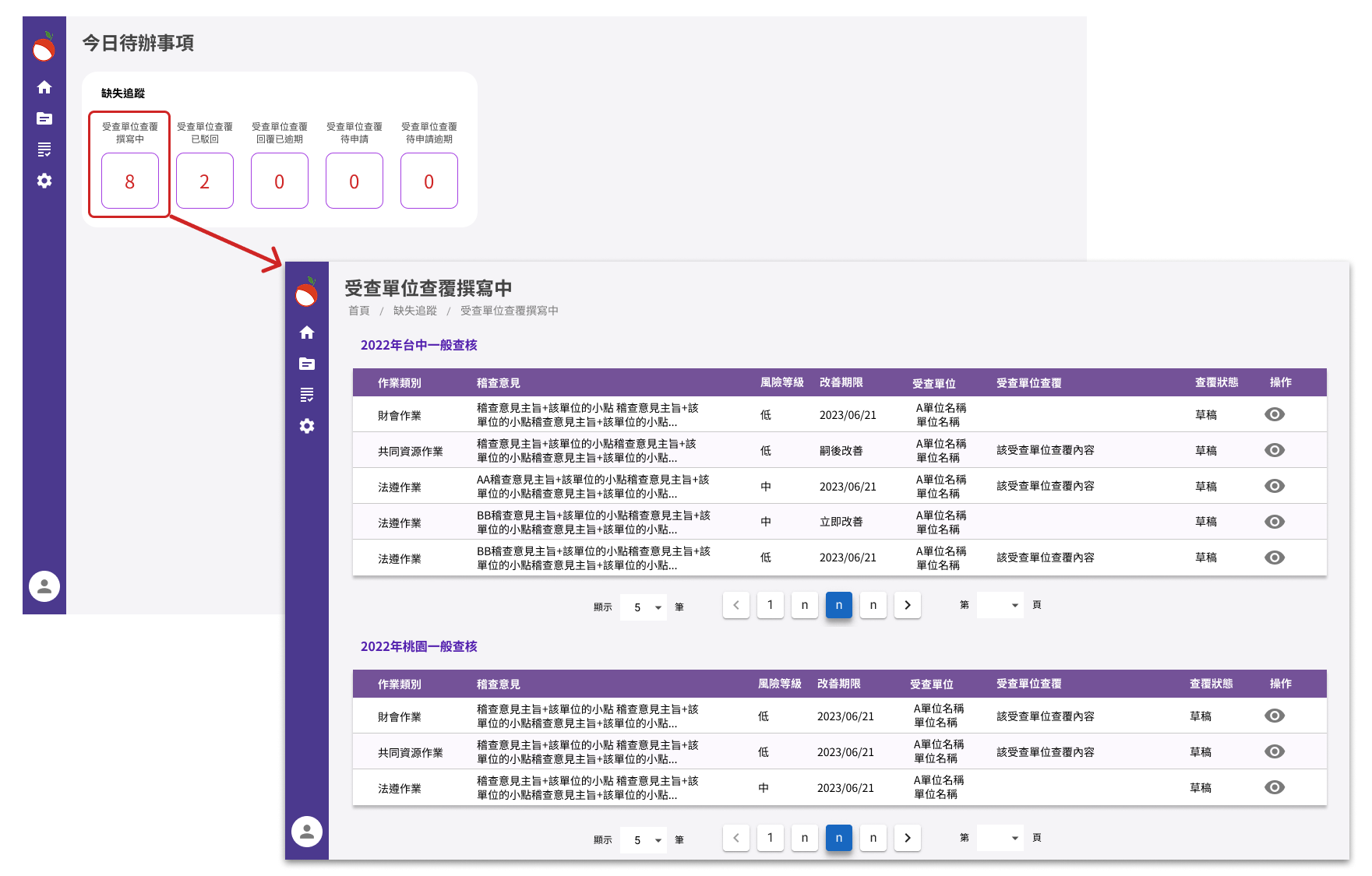 The image above is illustrative. Actual interfaces are customized per client requirements and cannot be disclosed due to confidentiality agreements.
Multi-Unit Information Isolation — Parallel Audits, Mutually Invisible
When multiple business units are audited simultaneously, the system enforces information isolation at the architectural level — each audited unit can only see its own audit cases and deficiencies, with no access to other units’ data. This isn’t manual permission management — it’s governance built into the system architecture.
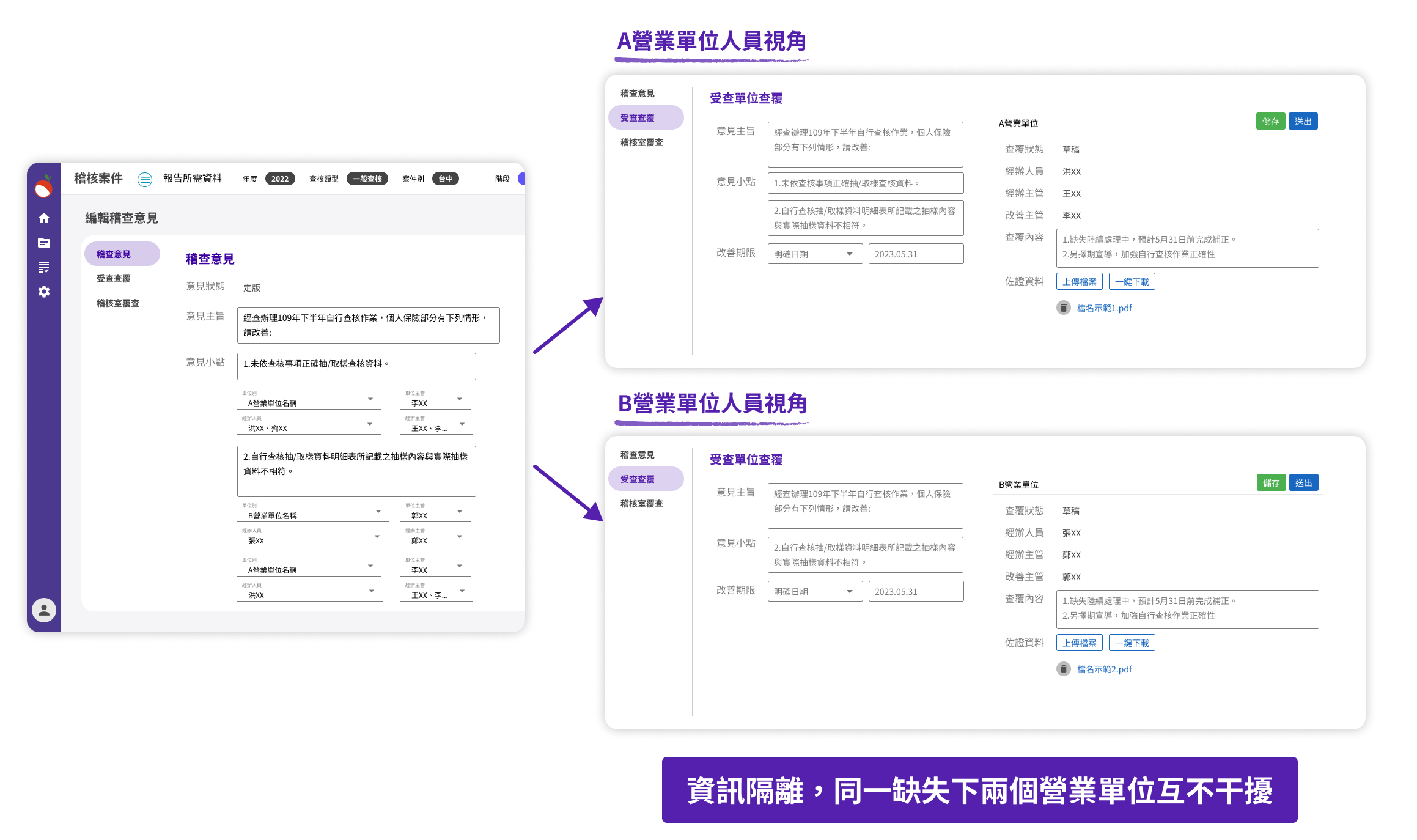 The image above is illustrative. Actual interfaces are customized per client requirements and cannot be disclosed due to confidentiality agreements.
Audit Criteria Standards Library — No More Starting from Zero
Audit items are managed in a hierarchical structure of “operation categories → risk items → audit reports,” with version control and approval workflows. Each new case can directly reference finalized audit criteria, ensuring audit quality doesn’t fluctuate with staff changes.
Auditors and Audited Units — Collaborating Within One Workflow
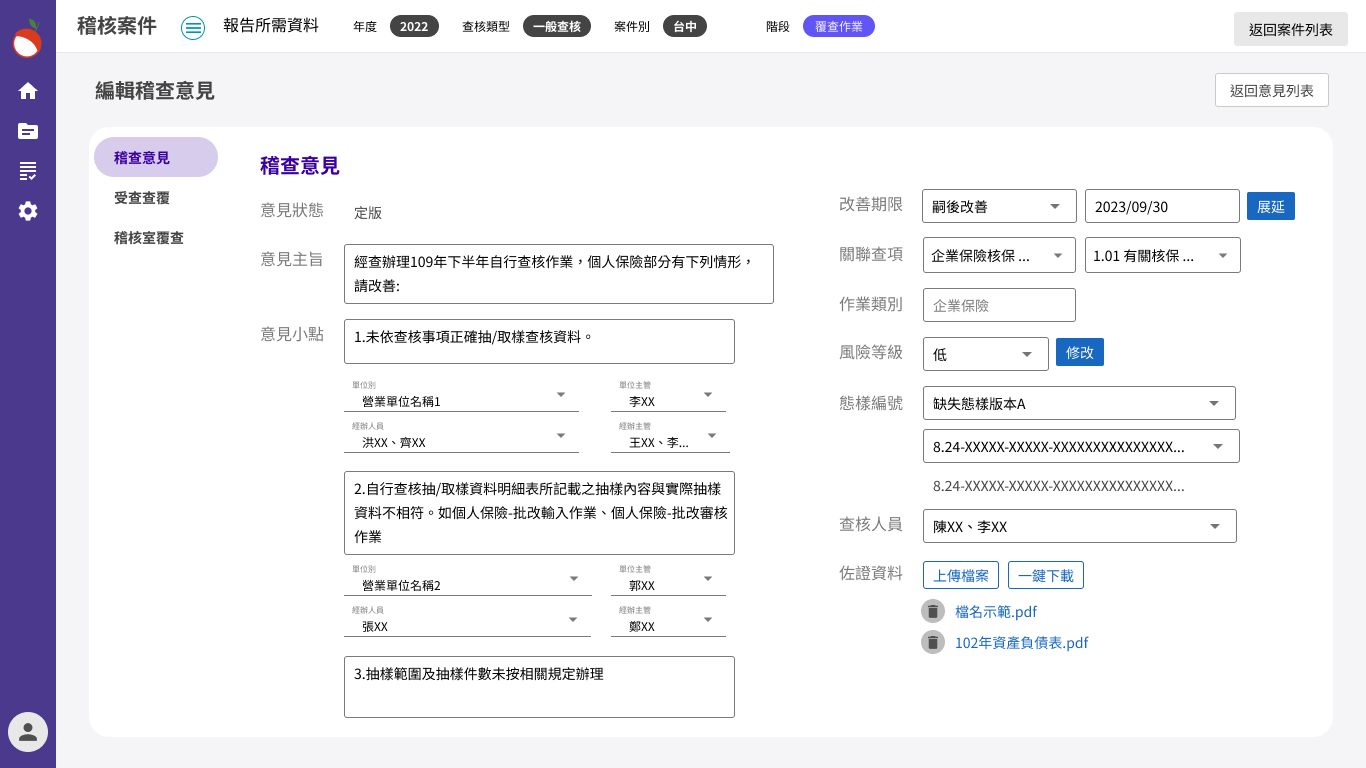 The image above is illustrative. Actual interfaces are customized per client requirements and cannot be disclosed due to confidentiality agreements.
Audit staff and audited units complete all interactions within one system: issuing findings, submitting remediation responses, approval workflows, and follow-up verification. Every step has access controls and approval trails, with clear accountability. Once a case is closed, the system automatically locks editing permissions to prevent post-hoc modifications.
The Impact
| Before | After |
|---|---|
| Deficiency remediation tracked manually in Excel, overdue items often overlooked | Every deficiency automatically tracked with deadlines and status, overdue items flagged in real time |
| Auditors and audited units communicated via email, version confusion | Both parties collaborate within one workflow, every step traceable |
| Information isolation during multi-unit audits relied on manual controls | Architectural-level isolation, audited units mutually invisible |
| Audit checklists rebuilt from scratch each time | Standards library continuously evolves, new cases directly reference established criteria |
Who Is This For?
The core problem this system solves: How to ensure every identified issue is tracked through to actual resolution.
If your organization faces a similar challenge — whether in internal auditing, compliance inspections, quality management audits, or any scenario requiring “find issue → require remediation → confirm implementation” closed-loop management — we’d love to connect.